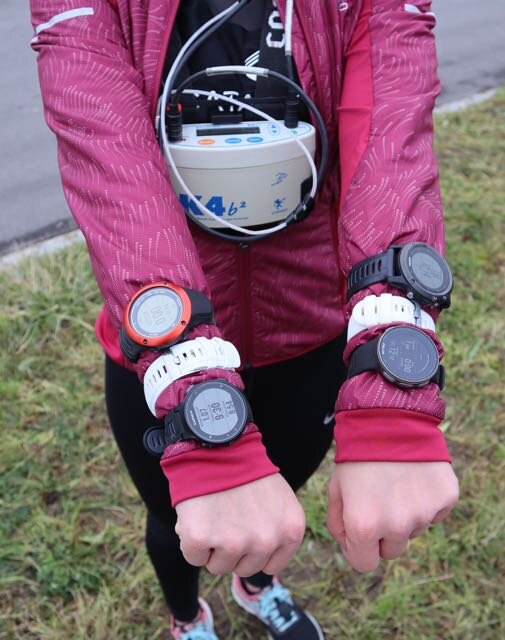
To our knowledge no other scientific project did compare as many GPS and running power devices as done in our latest validation study.
Some of our technologies seem so ground-breaking, that it might seem too good to be true. Questions we often hear are: “how come INSCYD is able to measure the VLamax while others fail to do so?” or “How is it possible that the Cycling PPD only needs four all out efforts but still results in so much information about the body?”. Critics raise the question: where is this knowledge coming from and is it correctly validated? In this blog we want to give you an example of how we develop and validate our technologies.
The right to know about reliability and validity of data.
We believe that our users and partners earn the right to know accurate data. This includes being able to share important information about the accuracy and tolerance of the data we provide. This also includes how – for example – the tolerances of the hardware they use effect the results calculated by INSCYD.
It would for instance make no sense to try to calculate a VO2max with an accuracy of ±2%, when we know the accuracy of the GPS watch is only ±5%
To give another example: at this very moment we have new technology available for beta users. They have been using it for 5 months already. We received a lot of positive feedback, but we did not launch it yet. That is because we will never offer a new technology until all the due diligence work is done. As mentioned above, that means – among others – that the tolerance and accuracy of the data should be on a par with standard lab testing.
Partners
Obviously, we are not in a position to recommend ourselves. When it comes to testing and validating the calculation INSCYD makes and the technologies it offers, we look for external and independent partners. Sometimes we already have the data or we can extract it from existing peer reviewed literature. When this is not the case, we collaborate with external partners in order to have an independent data source. To ensure the quality, we only partner up with the best: universities, industry leaders and government bodies.
Study: Energy demand and metabolic profile in running
In this blog we want to share insights into one of our latest projects. Let’s use this example to give you a close look behind the scenes. Recently we did a scientific research project about the energy demand and metabolic profile in running. We do this research project to collect more data and validate our new technology.
Since we believe team work makes the dream work, we partnered up with:
- CREPS Bordeaux – Center for Resources, Expertise and Performance in Sports
- INSEP – National Institute of Sport, Expertise and Performance of France
- Spital Thurgau – Münsterlingen – Hospital in Switzerland
- Catapult Sports – market leader for athlete tracking
Introduction
The aim of this study was to know more about the energy demand at different running speeds, energy contribution (Aerobic vs Anaerobic) at different speeds, substrate utilization (Fat vs Carbohydrates) at different speeds, maximum Glycolytic power in sprinting and the accuracy and reliability of different running power meters and GPS watches.
We had to initiate this study, because there is no other study that delivered the wealth of data we needed about the energy contribution from Aerobic and Anaerobic sources and the fat and carbohydrate utilization in outdoor running. There is also no other study using as many different running power meters and GPS watches as we did.
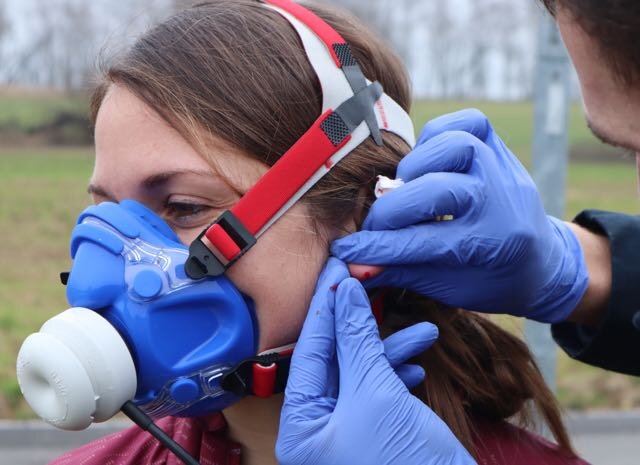
VO2, VCO2 and lactate concentration was captured for each effort in order to determine total energy demand as well as aerobic vs. anaerobic energy contribution.
Method – subjects
28 subjects participated in our study. Because we need to be sure that our findings are valid for all kind of athletes, we tested men and women (~50/50) of all performance levels. From elite team sports to recreational athletes and from sprint types to triathletes and elite marathon runners.
Method – technology
Bad input leads to bad output. To make sure our validation process was perfectly executed, we only used top of the bill technology: two mobile VO2 analysers from COSMED – which came directly back from COSMED getting brand new sensors and calibrations, a lab grade lactate measurement device (EKF, Biosen S-Line) and bio impedance body composition measurements (Tanita).
Since we are well aware of the fact that our INSCYD users are not always equipped with this kind of lab equipment, we added more common devices as well. For GPS watches, this included a Polar, Suunto and several Garmin models. For running power meters, this included a Polar, Stryd, Garmin and Catapult Sports top of the line Vector device.
Method – experimental protocol
All subjects performed 7 efforts ranging from a 20 second sprint to a 6-minute interval. Efforts included all kind of intensities, from an easy run to an all-out effort. The tests (e.g., lactate test) were conducted and data were evaluated by employees of CREPS Bordeaux and the local hospital of Münsterlingen, Switzerland.
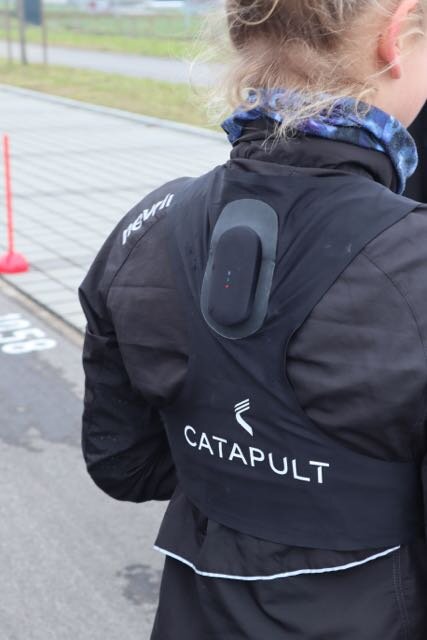
Catapult Vector: trusted by more than 2500 teams worldwide as the most accurate athlete tracking system.
What is next?
Now that we finished this study, we use the data to validate some of our new features and fine-tune our algorithms and future technologies. An example could be to use the data to develop new technologies for running power meters in the future. Another example is that we could use the outcome of the different GPS watches and running power meters. We could for instance treat the input from a Polar differently than from a Garmin, now we know how their accuracy differs.
Hopefully this blog gave you a quick look behind the scenes when it comes to developing and validating new INSCYD technologies. Soon there is more to come, so stay tuned and follow us on Instagram, Twitter, Facebook or get in touch via email!